
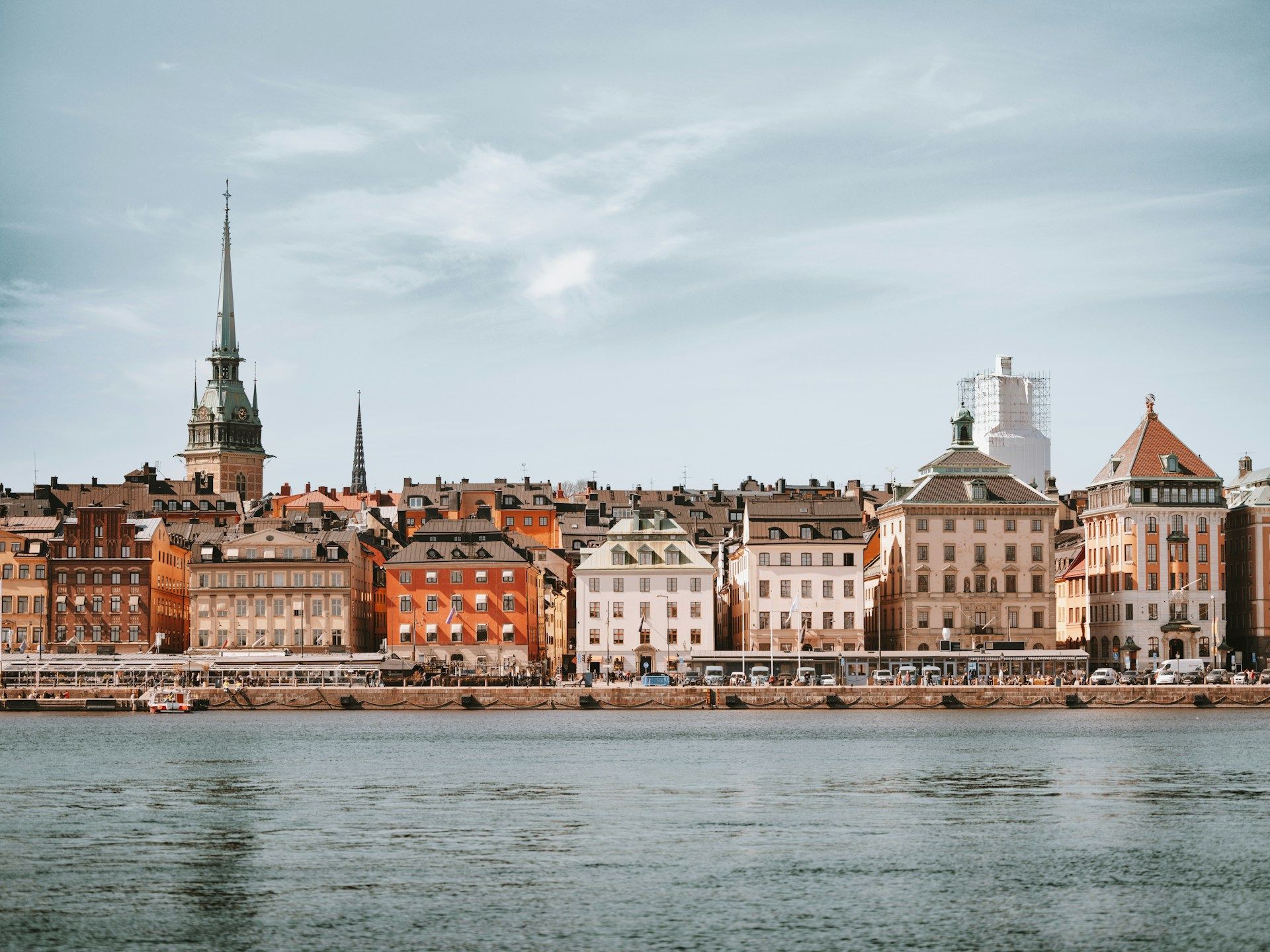
Stockholm spreads across fourteen islands where the Baltic Sea meets Lake Mälaren, and there's no better way to understand this city's soul than following its waterfront from harbor to harbor, bridge to bridge, watching the light dance on channels that have shaped Swedish history for seven centuries.
Explore Stockholm with WandrCity
Self-guided audio app · 24 stops · 119 SEK · No fixed schedule
A Stockholm waterfront walking guide isn't just about scenic views—it's about understanding how water defines everything here, from the medieval merchants who built Gamla Stan on its own fortified island to the modern city that still pulses with maritime energy. The city's unique geography creates countless waterside moments: sudden glimpses between buildings of ferries crossing to the archipelago, historic bridges connecting island neighborhoods, harborfront promenades where locals pause for fika while watching sailboats glide past.
Unlike landlocked capitals, Stockholm asks you to cross water repeatedly, each bridge offering a different perspective on how this floating city works. The challenge isn't finding waterfront walks—it's knowing which route connects the most compelling stories, the best photo opportunities, and the authentic Stockholm experience without backtracking or missing the narrative thread that ties it all together.
Why Stockholm's Waterfront Deserves a Strategic Route
Most visitors underestimate Stockholm's geography. They see "Old Town" on a map and assume it's a quick stroll, not realizing they're navigating an archipelago city where the most interesting stories happen at water's edge—but scattered across multiple islands with channels between them.
The waterfront isn't one continuous promenade. It's a constellation of harbors, quays, and viewpoints that reveal themselves as you move between Norrmalm's central harbor, across the bridges into Gamla Stan's medieval waterways, and eventually to Södermalm's elevated southern shores. Each transition tells part of Stockholm's story: how the city controlled Baltic trade routes, why it built on islands for defense, how modern Stockholm has reclaimed industrial waterfronts for public life.
Random wandering means you'll see water, certainly—but you'll miss the historical layers. Why does Riddarholmen have such a different harbor character than Skeppsbron? What's the story behind the distinctive yellow buildings facing the water near Slussen? A proper Stockholm waterfront walking guide connects these dots, creating a route that maximizes waterside storytelling while actually getting you somewhere.
This is where WandrCity transforms the experience. Rather than following a generic map or joining a rushed group tour, the app offers a carefully designed route with 24 stops that unfold Stockholm's waterfront narrative naturally—starting from Central Station and weaving through the city's most compelling water views with immersive audio narration that plays automatically as you reach each location. For just 119 SEK, you get a complete Stockholm waterfront walking guide that works at your own pace, with no fixed schedule —pause for photos at Riddarfjärden, linger over coffee watching boats at Kornhamnstorg, or sprint through sections if weather turns. The tour works entirely offline with GPS triggering stories precisely where they happened, often at water's edge where the historical events actually unfolded.
The Essential Stockholm Waterfront Route
Norrmalm's Harbor Gateway
Beginning near Central Station positions you at Stockholm's modern transportation hub—but also at a significant waterfront threshold. Within minutes of starting, you'll encounter your first harbor views where ferries depart for archipelago islands and the distinctive City Hall tower rises across Riddarfjärden bay. This northern waterfront has transformed dramatically over decades, from industrial port to pedestrian-friendly quays.
The early stops establish Stockholm's island logic. You're standing on what was once the "northern meadow" (Norrmalm), looking across water to Kungsholmen (King's Island) and getting your first sense of how channels separate distinct neighborhoods. For photography enthusiasts, morning light here is extraordinary—low sun catches the water and illuminates City Hall's brick façade in warm tones.
Gamla Stan's Island Heart
Crossing into Gamla Stan brings the Stockholm waterfront walking guide to its historical core. The Old Town occupies Stadsholmen island, and suddenly you're walking medieval lanes that end abruptly at water's edge—because this was a fortified island where every waterfront was a defensive position.
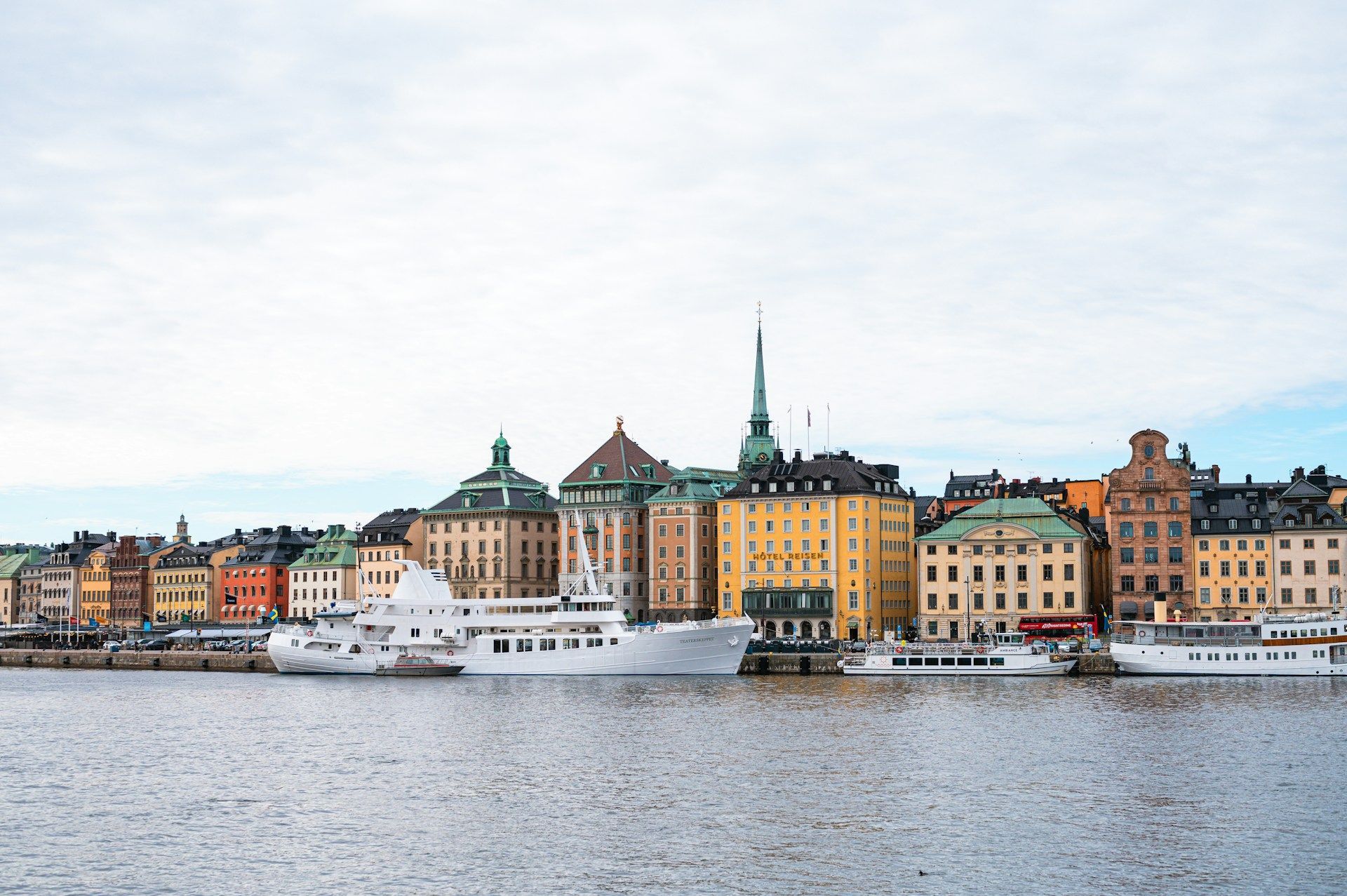
The eastern waterfront along Skeppsbron ("Ship's Quay") is particularly rich. This was Stockholm's main harbor for centuries, where Baltic trade goods were unloaded and inspected. Today it's one of Stockholm's most photogenic waterfronts: colorful buildings, harbor views to Djurgården island, outdoor cafés in summer where you can watch everything from kayakers to historic ships passing. The audio stories here connect what you're seeing now to the maritime bustle of medieval Stockholm.
Don't miss the small bridges connecting Gamla Stan to tiny Riddarholmen island—Riddarholmsbron offers stunning views back toward the Old Town's waterfront silhouette. Riddarholmen itself, with its church spire and quiet harbors, feels like a secret island neighborhood most tourists rush past. The western shore here provides completely different water views: looking across Riddarfjärden toward Södermalm's cliffs, you see Stockholm's dramatic topography—how these islands aren't flat but rise steeply from the water.
Södermalm's Panoramic Finale
The route's genius reveals itself as you climb into Södermalm. This southern island sits higher, and suddenly Stockholm's waterfront geography makes perfect sense from above. From viewpoints like Monteliusvagen, you see the whole island puzzle: Gamla Stan nestled between channels, City Hall across the water, ferries threading between islands, the entire waterfront you've just walked now visible as an interconnected system.
These elevated Södermalm perspectives are essential to any Stockholm waterfront walking guide because they provide context impossible to grasp at water level. You finally understand why Stockholm looks the way it does, how water shapes everything from neighborhood character to transportation patterns. For summer visitors, these southern viewpoints catch extended evening light beautifully—golden hour stretches long over the water, creating perfect photography conditions.
What Makes This Waterfront Walk Different
Generic Stockholm walking routes often treat water as backdrop—nice to look at but not the story itself. A true Stockholm waterfront walking guide recognizes that water is the story: why the city exists here, how it defended itself, what made it wealthy, how neighborhoods developed distinct identities despite being within walking distance.
The 24-stop route covers approximately 5 kilometers but feels effortless because you're always moving toward something: the next harbor view, a different island, a bridge with new perspective. The pacing balances waterfront promenades with brief inland passages through historic districts—because Stockholm's genius is how water and built environment interact, not water alone.
What sets WandrCity apart is the layering. At each waterfront stop, the audio narration weaves together multiple threads: historical events that happened at that exact location, architectural details you might miss, insights into how modern Stockholmers use these waterfronts today. You're not just seeing pretty harbors—you're understanding a maritime city that still lives with and from its waterways.
The self-guided format means you control the rhythm entirely. Couples often spend 3-4 hours doing the route with leisurely café stops and photo sessions. Solo travelers sometimes power through in two hours, then return to favorite waterfront spots later. If you're considering where to stay in Stockholm, completing this waterfront walk early in your visit helps you understand neighborhood geography—which islands feel right for your base.
Photography enthusiasts appreciate that GPS-triggered audio means both hands stay free for cameras. The app knows when you've reached a viewpoint and starts the story automatically—no fumbling with phones while trying to capture that perfect harbor reflection or bridge composition. The curated historical images at each stop also help you visualize what these waterfronts looked like centuries ago, adding depth to your own contemporary photos.
Stockholm's waterfront isn't a single experience—it's a constantly shifting relationship between islands, channels, harbors, and bridges that takes a full walk to comprehend. From your first harbor view near Central Station to the panoramic finale overlooking the entire island system from Södermalm, this Stockholm waterfront walking guide reveals a city that makes sense only when you follow its water's edge, crossing between islands, listening to stories that explain why this floating capital became Scandinavia's most distinctive urban landscape.
Start your journey
in Stockholm
WandrCity is a self-guided audio tour app for Stockholm.
24 stops · Immersive audio narration · 119 SEK one-time
Download on App Store Download on Google Play